If you’ve never grown your own food before, garlic is the perfect place to start. You push a few cloves into the soil in autumn, more or less forget about them over winter, and dig up fat, fragrant bulbs the following summer. This guide covers how to plant garlic properly, from choosing the right cloves to getting the depth and spacing spot on, so your harvest is worth the wait.
It takes very little space, very little effort and hardly any kit. A sunny patch of ground, a raised bed or even a deep pot on the patio will do the job. Let’s get into it.
When to plant garlic in the UK
The short answer to when to plant garlic is autumn, ideally between October and December. Garlic needs a spell of cold weather, roughly a month or two below 10°C, to trigger each clove to split into a full bulb. Planting in autumn gives it a whole winter of chill and lets the roots settle in while the soil is still a little warm.
You can also plant in late winter or early spring, from February to March, as long as the ground isn’t frozen or waterlogged. Spring-planted garlic usually gives slightly smaller bulbs, but it’s a handy fallback if autumn gets away from you. Some varieties are sold specifically for spring planting, so check the packet. Our garden jobs this month guide is a good nudge if you tend to lose track of timings.
| Planting time | Pros | Cons | Typical harvest |
|---|---|---|---|
| October to December | Longest growing season, biggest bulbs, gets the cold it needs | Can rot in very wet, heavy soil | June to July |
| February to March | Good backup if you missed autumn, avoids winter waterlogging | Smaller bulbs, less time to bulk up | July to August |
Choosing garlic bulbs for planting
It’s tempting to plant a bulb from the supermarket, but it’s worth resisting. Shop-bought garlic is often grown in warmer climates and may not suit UK conditions, and it can carry viruses that weaken the crop. Proper garlic bulbs for planting are certified disease-free and chosen to cope with our weather.
You’ll see two main types. Softneck garlic is the one you usually find in shops. It tends to store well and has soft stems you can plait. Hardneck garlic sends up a stiff flowering stem, often has bigger, easier-to-peel cloves and a richer flavour, but it doesn’t keep quite as long. Plenty of gardeners grow one of each to spread the harvest.

5X Fresh Purple Wight Garlic Bulbs for Planting Autumn and Spring
A popular choice for beginners who want a reliable crop, with the bonus of being suitable for both autumn and spring planting.
£7.99 Shop Now

Garlic for Planting UK -UK Garlic 30 Cloves ‘Provence Wight’
Good value if you want plenty of cloves to fill a bed, though you’ll need the space to make the most of 30 of them.
£9.99 Shop Now
Where to grow garlic
Garlic loves sun and hates sitting in wet soil. Pick the sunniest spot you have, with free-draining ground. If your garden is on heavy clay, you have a few options: work in plenty of well-rotted organic matter, plant on a slightly raised ridge, or grow in a raised bed or large container.
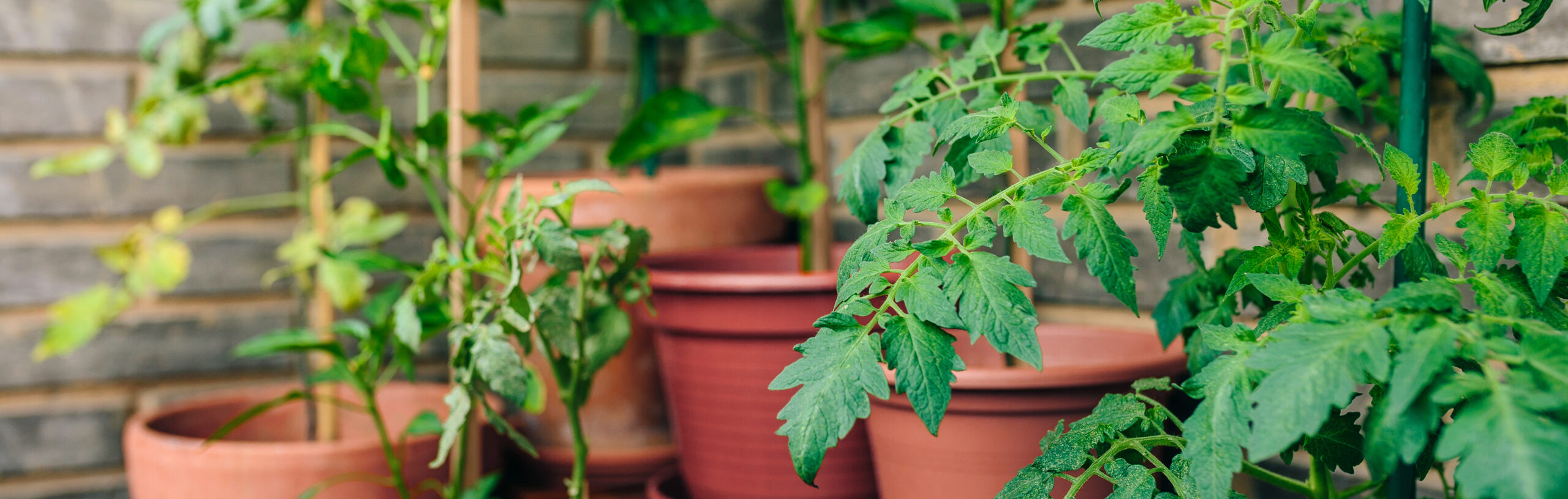
Avoid areas where you’ve grown onions, leeks or garlic in the last couple of years, as they share pests and diseases. Garlic is also happy in pots at least 20cm deep, filled with a good multipurpose compost mixed with a few handfuls of grit for drainage. If you’ve had a go at growing tomatoes in pots, the same patio space can grow garlic over winter before the tomatoes go in.
How to plant garlic, step by step
Once you’ve picked your spot, the actual job takes minutes. Here’s how to plant garlic so each clove has the best start.
- Prepare the soil by removing weeds and forking it over to loosen it. Rake in a general-purpose fertiliser if your soil is poor.
- Break the bulb into individual cloves just before planting. Keep the papery skin on and use the biggest, healthiest cloves; small ones from the middle give small bulbs.
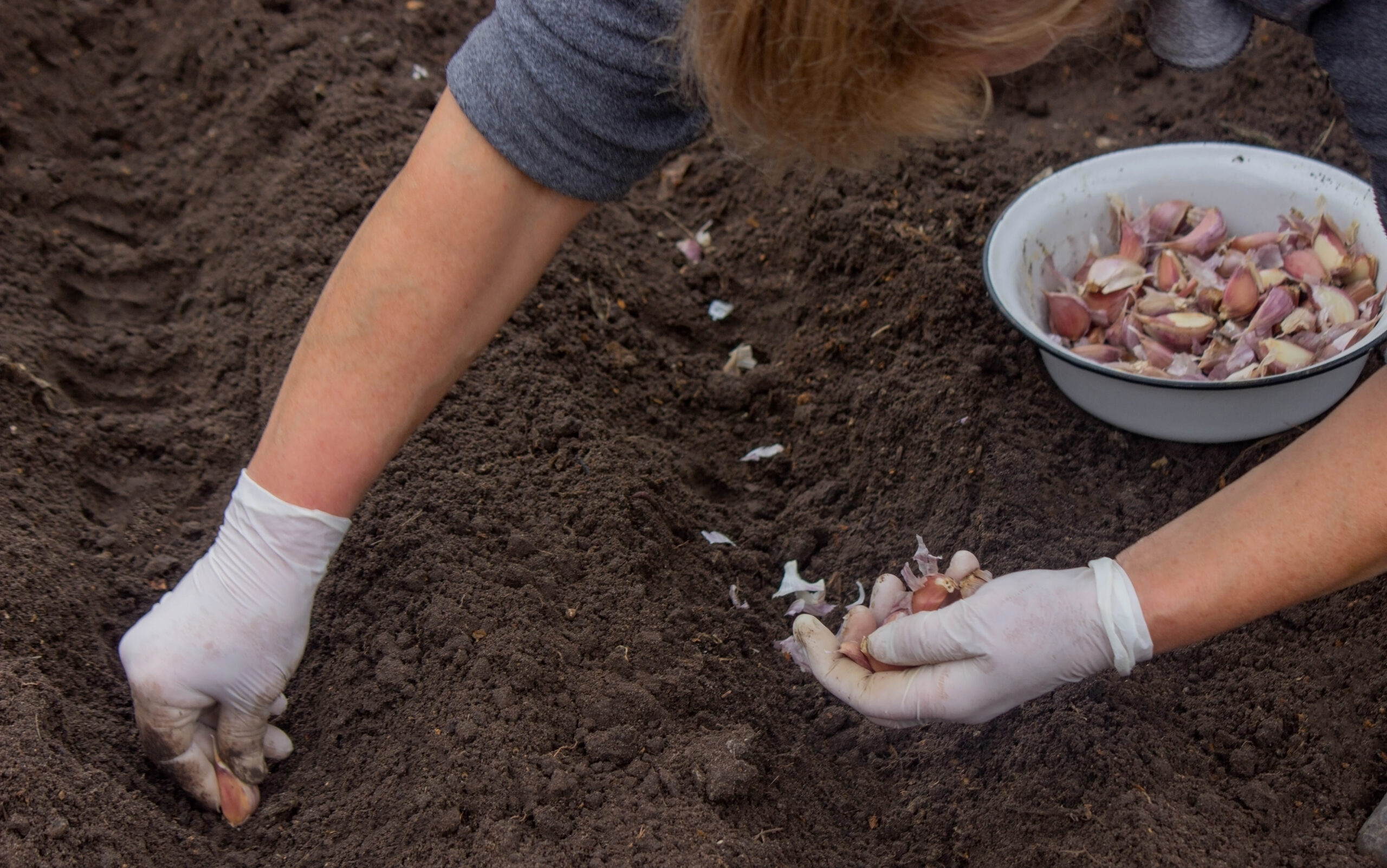
- Push each clove into the soil, pointed end up and flat base down, so the tip sits about 2.5cm (1in) below the surface. On light, sandy soil you can go a little deeper.
- Space cloves about 15cm (6in) apart, in rows roughly 30cm (12in) apart.
- Firm the soil gently over the top and water in if the ground is dry.
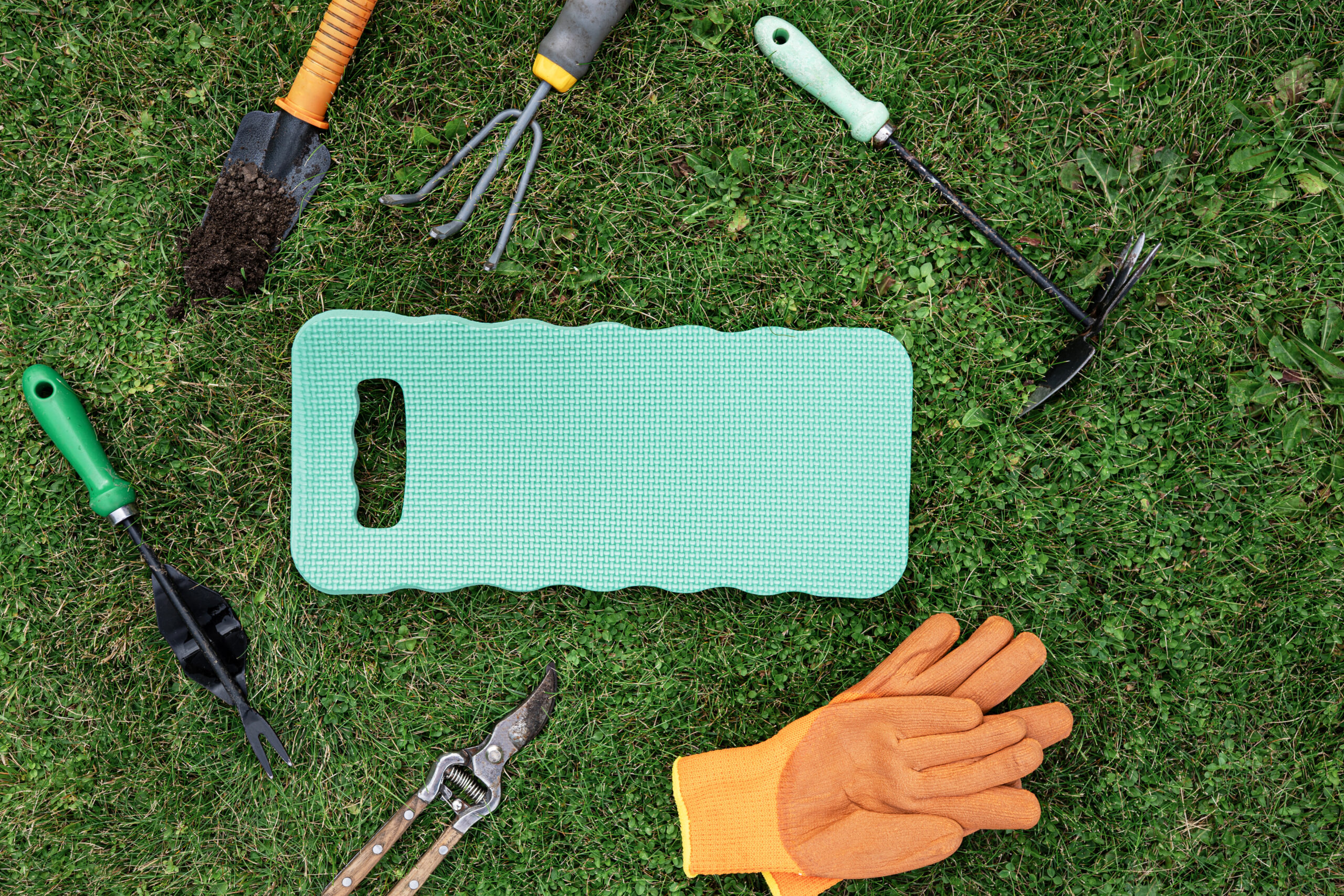
A trowel with depth markings takes the guesswork out of it, and you’ll find a few good ones in our garden hand tools section. If birds keep pulling the cloves up, a bit of fleece or netting over the bed for the first few weeks solves the problem.

D.A.Y. Republic Small Garden Trowel, Wooden Handle, Depth Measurement
The depth markings on the blade make it easy to plant every clove at the same depth, though the wooden handle will want drying off after use.
£4.35 Shop Now
Top tip: On very heavy, wet soil, start cloves off in small pots or modules in a cold frame or unheated greenhouse in autumn, then plant them out in early spring once they’ve rooted.
How to grow garlic through winter and spring
Learning how to grow garlic well is mostly about keeping things tidy and not fussing. Green shoots usually appear within a few weeks of autumn planting and then sit quietly through the coldest months.
- Weeding: garlic doesn’t compete well, so hoe or hand-weed regularly, taking care not to nick the bulbs.
- Watering: it rarely needs watering in winter. In a dry spring, water every week or two to help bulbs swell, then stop once the leaves start to yellow.
- Feeding: a light sprinkle of general fertiliser in early spring gives plants a boost. Browse our feeds and fertilisers for options.
- Flower stems: hardneck varieties send up curly stems called scapes in early summer. Snap them off so the plant puts its energy into the bulb. They’re delicious stir-fried.
Common problems and how to avoid them
Garlic is a pretty trouble-free crop, but a few things can catch you out. Rust shows up as orange spots on the leaves, especially in mild, damp summers. It rarely kills the plant, but it can reduce bulb size. Good spacing, sensible crop rotation and avoiding too much nitrogen all help.
White rot is more serious. It causes yellowing leaves and a white fluffy mould at the base, and it can stay in the soil for years. If you spot it, lift and dispose of affected plants (not in the compost) and grow your garlic elsewhere for several years. Rotting cloves in winter usually point to soil that’s too wet, which is why drainage matters so much.
Harvesting and storing your garlic
Autumn-planted garlic is usually ready from June to July, with spring-planted bulbs following a few weeks later. The sign to watch for is the lower leaves turning yellow while the top few are still green. Don’t wait until the whole plant is brown, or the bulbs can start to split.
Loosen the soil with a fork and lift the bulbs gently rather than pulling them. Lay them out somewhere dry and airy, such as a greenhouse bench or a sunny windowsill, for two to three weeks until the skins are papery. Then trim the roots, cut the stems or plait softnecks together, and store somewhere cool and dry. Well-dried softneck garlic can keep for months.
Once you’ve got the hang of it, garlic sits nicely alongside other easy crops. Have a look around our grow your own section for what to plant next, or check out garden tools for beginners if you’re building up your kit.
Frequently asked questions
How deep should you plant garlic?
Plant each clove so the pointed tip sits about 2.5cm (1in) below the soil surface. On light, sandy soil you can go slightly deeper, to around 5cm, which helps stop the cloves drying out or being lifted by frost.
Can I plant garlic from the supermarket?
You can try, but it’s not recommended. Supermarket garlic may be a variety suited to warmer countries, and it can carry viruses. Certified garlic bulbs for planting give far more reliable results.
Is it too late to plant garlic in January?
Not necessarily. If the ground isn’t frozen or waterlogged you can plant in January or wait until February to March. Bulbs may be a little smaller than autumn-planted ones, but you’ll still get a crop.
Which way up do you plant garlic?
Pointed end up and the flat base, where the roots grow from, facing down. If you plant them upside down they’ll usually still grow, but they waste energy turning round.
How long does garlic take to grow?
Around eight to nine months from autumn planting to harvest, or about five to six months for spring-planted garlic.