Walk into any garden centre and you’ll find walls of gadgets. The good news is that most gardens need only a handful of tools, and buying a few well-made ones beats a pile of cheap ones that bend or rust. Here are the essential garden tools every beginner actually needs, in the order we’d buy them, plus a few tips on choosing them and keeping them in good shape.
The essentials, in order
This is the kit we’d buy first. Between them, these tools help with almost every job in a typical British garden, from planting and pruning to weeding and keeping the lawn tidy.
1. A hand trowel
If you only buy one tool, make it a trowel. You’ll use it for planting bulbs and bedding, potting up, weeding and digging small holes. Look for a stainless steel blade that won’t rust and a comfortable handle that won’t twist in your hand. Depth markings on the blade are handy when planting bulbs, and a narrow blade gives you more precision in tight spots between plants.

Spear & Jackson 4058NB Elements Carbon Hand Trowel
A compact carbon steel trowel from Spear & Jackson that’s comfortable and very good value.
£6.12 Shop Now
2. Secateurs
A good pair of secateurs (sometimes called pruning shears) is the tool you’ll reach for most after the trowel. They’re for deadheading, pruning roses and shrubs, cutting back perennials and harvesting. Choose bypass secateurs for living plants: they cut cleanly like scissors rather than crushing stems, which helps keep plants healthy. Keep the blade sharp and clean, and they’ll make neat cuts for years. For more choice, see our pruning tools.

Spear & Jackson 7159BS Razorsharp Advantage Bypass Secateurs
Sharp, easy-action bypass secateurs that suit most hands.
£8.95 Shop Now
3. A digging spade
A spade is essential for planting shrubs and trees, digging new garden beds and moving soil or compost. A stainless steel head glides through heavy soil and is easy to clean. Choose a shaft length that suits your height, so you’re not bending double, and a sturdy T or D handle you can grip with gloves on. If you have a small garden or raised beds, a slightly smaller border spade is lighter and easier to use.

Spear & Jackson 4450DS Traditional Stainless Digging Spade
A traditional stainless steel digging spade built to last for years.
£19.49 Shop Now
4. A garden fork
A garden fork breaks up compacted soil, lifts potatoes, divides perennials and turns the compost heap. On heavy clay a fork is often easier than a spade for the first dig, because the tines slip in where a blade would stick. Look for square or flattened tines that won’t bend, and a solid joint where the head meets the shaft. A small hand fork is worth having too, for weeding and loosening soil in pots and borders.

Heavy Duty Garden Digging Fork
A heavy-duty digging fork for breaking up tough ground, lifting and turning compost.
£10.90 Shop Now
5. A hoe
A hoe is the quickest way to keep beds and the veg patch free of weeds. Slide a Dutch hoe just under the surface on a dry day and it slices through young weeds, which then shrivel in the sun. Ten minutes once a week saves hours of hand weeding later. Pick one with a long handle so you can work standing up straight.
6. A garden rake
There are two main types. A spring-tine rake clears leaves and moss from the lawn, while a soil rake with short, stiff teeth levels beds before sowing and planting. If you only buy one, an adjustable leaf rake is the most useful for most gardens.
7. A watering can or hose
Plants in pots and new plants need regular watering in summer. A watering can with a fine rose is perfect for seedlings and a small garden; a larger 10-litre can saves trips to the tap. Plastic cans are light and cheap, while metal ones last longer. For bigger spaces, a hose on a reel makes life much easier.

Zuvo Watering Can Outdoor 6.5L with Detachable Rose Head, Plastic
A 6.5-litre plastic can with a detachable rose, light enough for daily watering.
£7.99 Shop Now
8. Garden gloves
Garden gloves protect your hands from thorns, nettles, splinters and blisters, and keep soil out from under your nails. A pair of thin, grippy gloves is best for everyday jobs, with a tougher leather pair for roses and brambles. Make sure they fit well: baggy gloves make it hard to handle seeds and small plants.

DIY Doctor Thorn Proof Gardening Gloves for Women, Leather, 1 Pack
Thorn-resistant leather gloves for pruning roses and tackling brambles.
£8.99 Shop Now
Nice to have later
- Loppers for branches too thick for secateurs
- Hedge shears if you have hedges or box balls
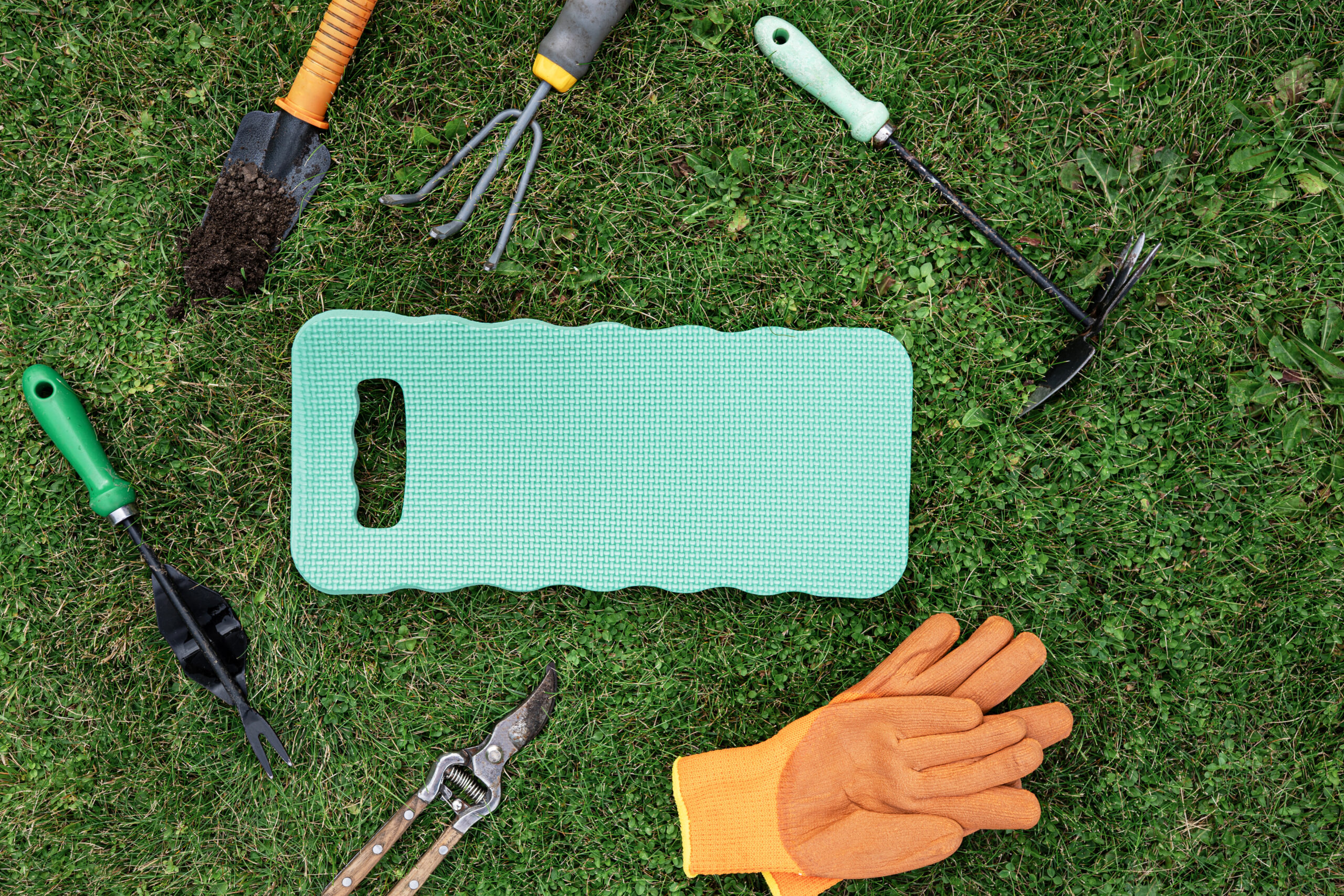
- A kneeling pad to save your knees
- A wheelbarrow once you start moving compost and soil in bulk
- A bulb planter if you plant lots of bulbs each autumn
Is a garden tool set worth it?
A good set is a great way to start, and they make lovely gifts for a friend who’s just got their first garden. Check what’s included: you want a trowel and hand fork at the very least, ideally with a transplanter and a sturdy bag. Avoid sets padded out with tools you’ll never use.

Garden Tools Set 10-Piece Gardening Tools with Kneeling Pad Storage Bag
A 10-piece set with kneeling pad and storage bag, a handy all-in-one start for new gardeners.
£19.99 Shop Now
What makes a good garden tool
| Look for | Why it matters |
|---|---|
| Stainless or carbon steel | Stays sharp, resists bending and rust |
| Solid joint between head and handle | Where cheap tools usually snap |
| Comfortable grip | Less strain on hands and wrists |
| Right length for your height | Saves your back |
Top tips for looking after your tools
- Knock off soil after each use and give metal parts a quick wipe.
- Dry tools before putting them away, and keep them in a dry shed or garage.
- Rub a little oil on blades and tines before winter to stop rust.
- Sharpen secateurs, hoes and spades once or twice a year.
- Hang tools up rather than leaving them on the floor, so handles don’t rot.
Browse our full range of garden hand tools or the wider garden tools section.
Frequently asked questions
What tools do we need for gardening?
For most gardens: a hand trowel, secateurs, a spade, a garden fork, a hoe, a rake, a watering can and a pair of gloves. That covers planting, pruning, digging, weeding and watering.
What garden tools do I need for a small garden?
A trowel, hand fork, secateurs, a border spade and a watering can will cover almost everything in a small garden or on a patio.
What is the most useful garden tool?
The hand trowel. It’s used every time you plant, pot up or weed.
What is the best garden tool brand in the UK?
There’s no single best, but long-established names such as Spear & Jackson, Wilkinson Sword, Burgon & Ball, Kent & Stowe and Fiskars are widely sold in the UK and have good reputations. Look at the build quality and warranty as much as the name.
Are expensive garden tools worth it?
Mid-range tools from established brands usually last far longer than budget ones. You don’t need the most expensive, but avoid the very cheapest.
How do I look after garden tools?
Clean off soil, dry them, oil metal parts occasionally and store them somewhere dry. Sharpen blades once or twice a year.